

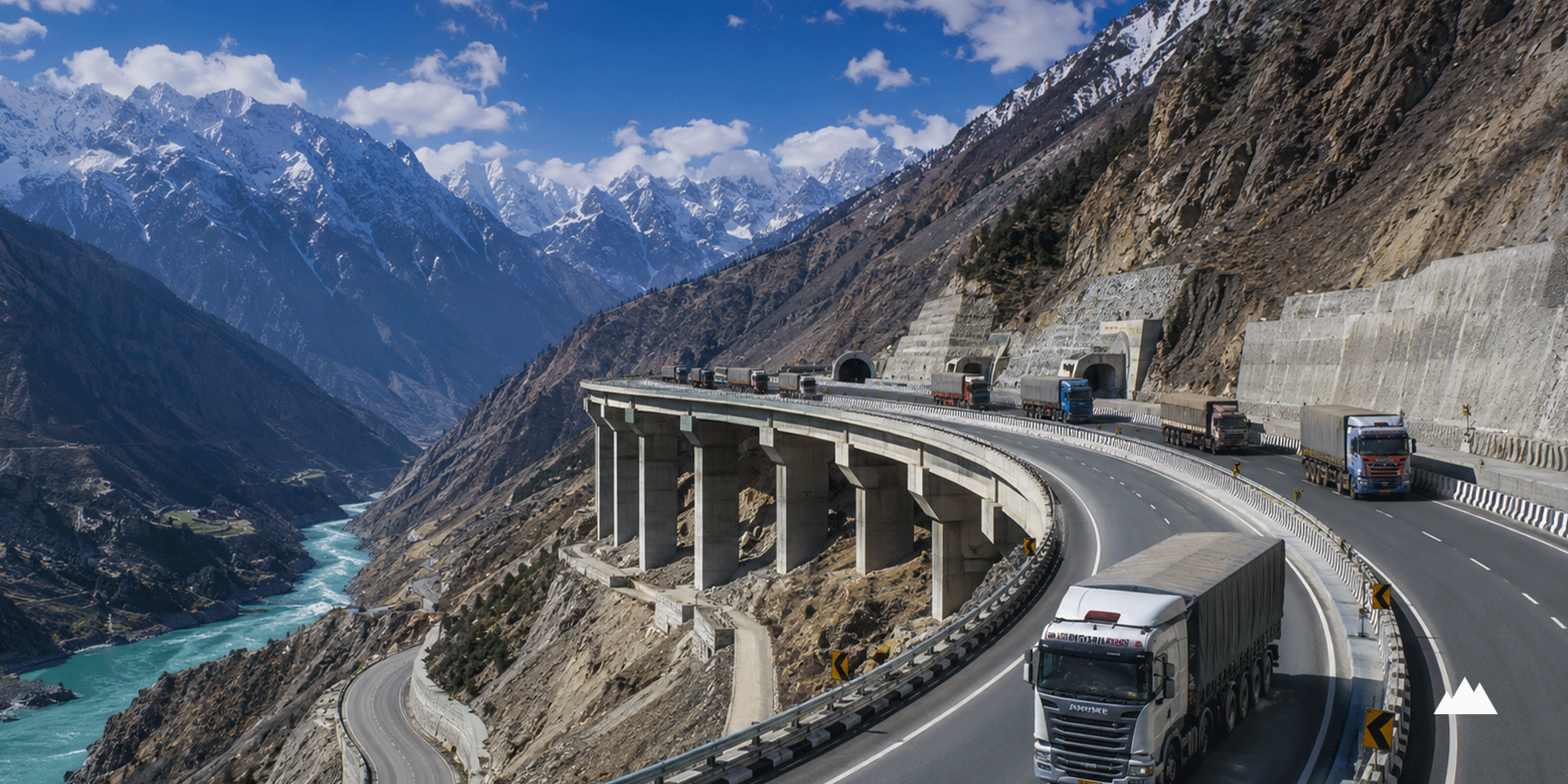
Infrastructure and Capital
An estimated $80 billion connectivity gap separates the Himalayan region's strategically viable infrastructure pipeline from the capital actually committed to it.
$80B
Estimated unfunded Himalayan connectivity investment gap
₹26,841 Cr
Spent on the Rishikesh–Karnaprayag rail spine to date
The Systemic Problem
Individual Himalayan infrastructure projects — the Rishikesh-Karnaprayag rail spine, the Sivok-Rangpo link, Nyoma airfield — are proving out strong commercial and strategic logic. But collectively they remain a small fraction of the estimated $80 billion required to connect the region at the density its economy already justifies. Conventional project finance still prices Himalayan terrain as pure risk rather than as the cost of unlocking a market roughly twice the population of Russia.
Why It Has Global Consequences
Closing even a third of the connectivity gap would plausibly do more for regional GDP growth than any single pending policy announcement. The gap also shapes how quickly energy, trade, and water infrastructure elsewhere in the region can be built and financed, since most of it depends on the same access corridors.
Related Intelligence
Current HEF Research
Trackers
Related Projects
Indicators HEF Will Monitor
- Himalayan connectivity investment gap, in current USD
- Capital committed versus the identified strategic infrastructure pipeline
Intended Institutional Outcomes
- A capital framework that prices Himalayan terrain risk accurately rather than punitively
- Measurable, sustained closure of the connectivity investment gap