

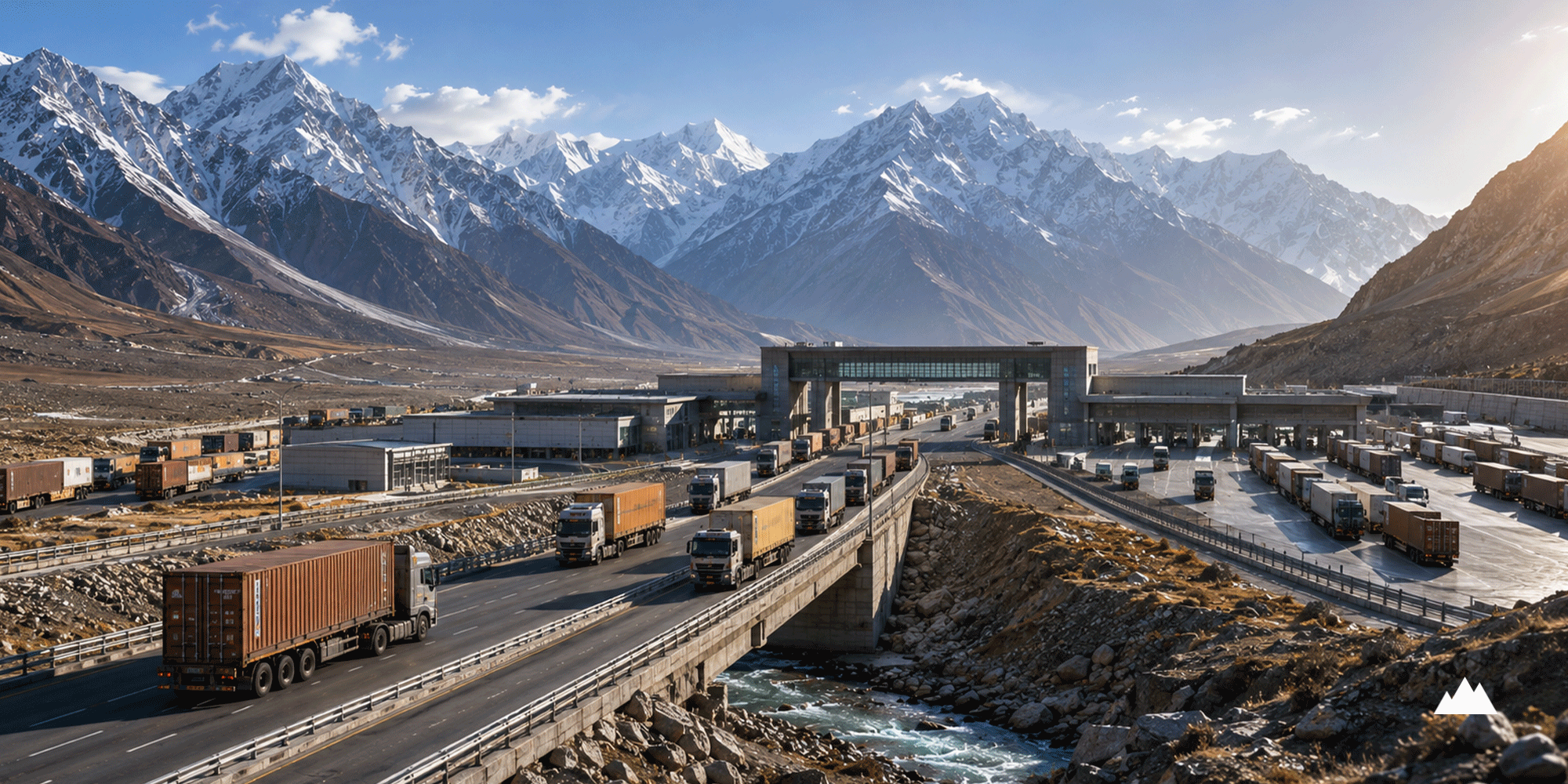
Trade and Corridors
The Himalayan arc carries $450 billion in combined regional GDP, yet formal border trade runs at a fraction of its estimated $50 billion annual potential.
$450B
Combined GDP of the Himalayan Region
$50B
Estimated annual formal border-trade potential, currently unrealized
$60B
Potential tourism economy by 2030, versus ~$15B today
The Systemic Problem
240 million people across the Himalayan arc generate $450 billion in combined GDP — roughly a tenth of India and China's per-capita output despite comparable scale. Formal border trade through five Himalayan mountain passes remains far below its estimated $50 billion annual ceiling, and the region's tourism economy, worth about $15 billion today, has a credible but unrealized path to $60 billion by 2030.
Why It Has Global Consequences
As global shipping and Middle East land routes are repriced for risk, Himalayan land corridors are one of the few underused alternate trade pathways connecting South and East Asia. Leaving that capacity stranded is a direct cost to regional growth and to the diversification of Asian trade routes more broadly.
Related Intelligence
Trackers
Related Projects
Indicators HEF Will Monitor
- Formal border-trade volume through Himalayan mountain passes
- Tourism-economy revenue against the $60B 2030 potential
Intended Institutional Outcomes
- Reopened and modernized formal trade corridors across the Himalayan passes
- A sustainable tourism-development sequencing framework, not extraction-paced growth